
Thinking, Fast and Slow Summary: Key Ideas, Biases, and Real-Life Lessons
Summary of Daniel Kahneman’s Thinking, Fast and Slow, including cognitive biases and prospect theory.
Daniel Kahneman’s Thinking,Fast and Slow explains how human judgment works through two different modes of thinking: one fast and intuitive, the other slow and deliberate. The book brings together decades of research in psychology and behavioral economics to show why people often make predictable mistakes in judgment, planning, and decision-making.
Daniel Kahneman’s book explores how intuition and deliberate reasoning shape human decisions.
Why this book-Thinking, Fast and Slow matters
This book matters because it challenges the idea that people make decisions rationally in a consistent way. Instead, Kahneman shows that choices are heavily shaped by mental shortcuts, biases, and the way problems are framed. That makes the book especially useful for readers interested in business, investing, leadership, project planning, policy, and everyday judgment.
One of the book’s biggest strengths is that it does not only describe mistakes; it explains why those mistakes happen and where they are most likely to occur. It also helps readers understand when intuition can be trusted and when slow analysis is necessary.
The two systems of thinking
Kahneman organizes the book around two mental systems. System 1 is fast, automatic, emotional, and effortless, while System 2 is slow, analytical, deliberate, and mentally demanding. System 1 handles quick pattern recognition and immediate impressions, whereas System 2 is responsible for calculation, careful reasoning, and self-control.
| Feature | System 1 | System 2 |
| Speed | Fast and automatic | Slow and deliberate |
| Effort | Little or no effort | Requires focused attention |
| Style | Intuitive and emotional | Logical and analytical |
| Main role | Generates impressions and quick judgments | Reviews, computes, and overrides when needed |
| Common weakness | Biases and snap errors | Fatigue, laziness, and limited attention |
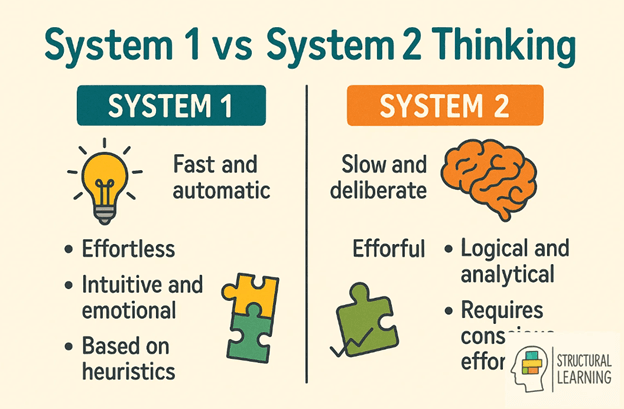
System 1 creates rapid impressions; System 2 performs effortful reasoning.
A useful way to understand the book is to see System 1 as the mind’s default mode. It runs continuously in the background and quickly creates a story about what is happening around us. System 2 can question that story, but because effort is costly, it often accepts System 1’s suggestions without enough scrutiny.
This idea explains many real-life situations. A person may instantly feel that a stock is promising that a speaker is trustworthy, or that a project will finish on time, and only later discover that the judgment was based on incomplete evidence rather than careful analysis.
Cognitive biases and mental shortcuts–Thinking, Fast and Slow
A major part of the book explains that fast thinking relies on heuristics, which are mental shortcuts used to make judgments quickly. These shortcuts are useful in many ordinary situations, but they can also produce systematic errors called cognitive biases.
| Bias or heuristic | What it means | Simple example |
| Anchoring | An initial number or idea pulls later estimates toward it | A high opening price makes a discount seem better than it is |
| Availability heuristic | People judge frequency by how easily examples come to mind | A recent accident in the news makes a risk feel more common |
| Representativeness | People judge probability by similarity to a stereotype | A “bookish” description makes someone seem more likely to be a librarian |
| Base-rate neglect | Statistical background information is ignored | Stereotypes override actual population data |
| Framing effect | Choices change when the same fact is described differently | “90% survival” feels better than “10% mortality” |
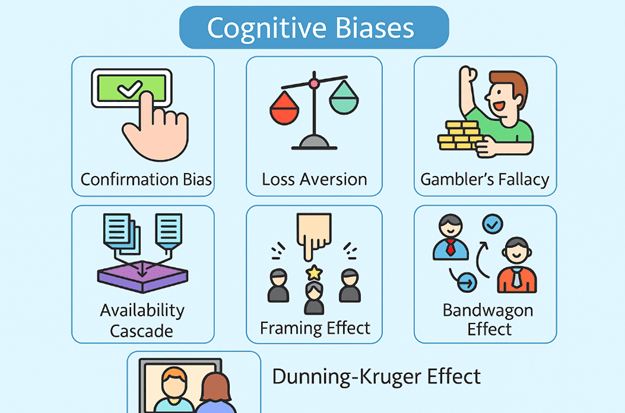
Common mental shortcuts save time, but they also create predictable errors.
One of Kahneman’s most important ideas is that people usually do not notice these biases while they are happening. The mind tends to produce confidence along with its first answer, even when the answer is weak. That is why intelligent and experienced people are not immune to poor judgment.
Another key concept is WYSIATI, short for “What You See Is All There Is.” Kahneman uses this phrase to explain that the mind quickly builds a coherent story from the information available and often ignores what is missing. As a result, people become overconfident because the story feels complete, even when it is based on partial evidence.
Overconfidence and the planning fallacy
Kahneman argues that overconfidence is one of the most powerful flaws in human judgment. People regularly believe they understand the past better than they really do and predict the future with more accuracy than evidence justifies. This creates problems in business strategy, investing, forecasting, and project management.
The book gives special attention to the planning fallacy, which is the tendency to underestimate time, cost, and risk while overestimating benefits. Even when similar projects have previously gone over schedule or budget, people continue to believe that their own case will go smoothly. Kahneman recommends using the outside view, meaning historical data from similar projects, instead of relying only on internal optimism.
| Planning approach | Description | Likely result |
| Inside view | Focuses on the current project’s special features | Often too optimistic on cost and schedule |
| Outside view | Looks at outcomes from similar past projects | More realistic estimates and better risk awareness |
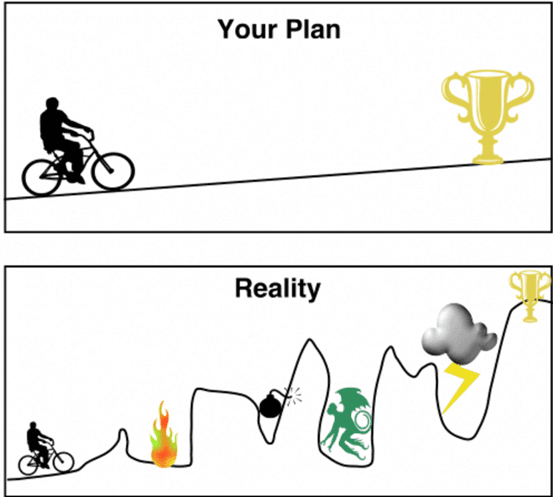
The planning fallacy causes teams to underestimate time, cost, and risk.
This lesson is highly practical. In project work, it is easy to think that better effort, stronger commitment, or more expertise will overcome the delays seen in other cases. Kahneman shows that this belief is often just another expression of overconfidence.
Prospect theory and loss aversion
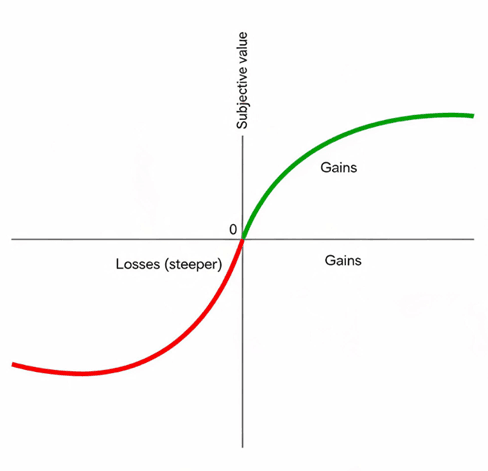
One of the most influential sections of the book explains prospect theory, developed by Kahneman and Amos Tversky. Prospect theory shows that people do not evaluate outcomes in absolute terms; instead, they judge gains and losses relative to a reference point. This is one reason the same result can feel good in one context and disappointing in another.
The most famous insight from prospect theory is loss aversion: losses feel larger than equivalent gains. In practice, losing 100 feels more painful than gaining 100 feels satisfying. This helps explain why investors hold losing assets too long, why people resist change, and why negotiations can become emotionally charged.
| Situation | How loss aversion appears |
| Investing | People hold losing stocks too long and sell winners too early |
| Negotiation | Concessions feel like painful losses |
| Workplace change | Existing benefits are valued more than similar new gains |
| Personal choices | People gamble to avoid accepting a sure loss |
Kahneman also explains that people distort probabilities. They tend to overweight small probabilities and underweight more ordinary ones, which helps explain both lottery buying and exaggerated fear of rare events. This insight matters in finance, safety, insurance, and public risk communication.
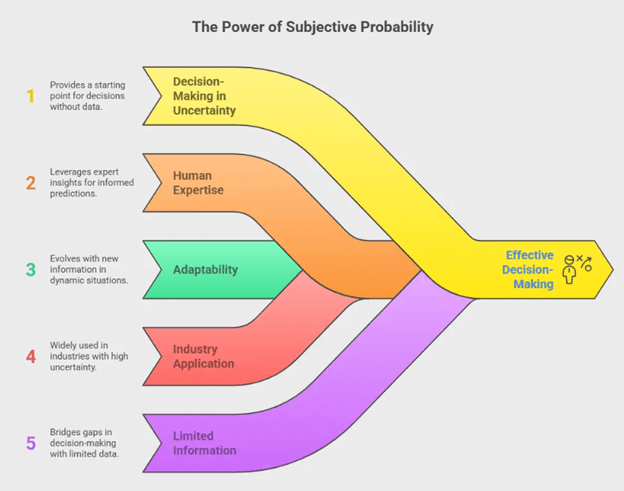
People do not perceive probabilities in a straight, rational way.
The experiencing self and the remembering self
In the final part of the book, Kahneman introduces a distinction between the experiencing self and the remembering self. The experiencing self lives through events in real time, while the remembering self looks back and forms the story of what happened. These two versions of the self do not always agree.
| Aspect | Experiencing self | Remembering self |
| Focus | Present moment | Narrative of the past |
| Key question | “How do I feel now?” | “How was it overall?” |
| Basis of judgment | Moment-to-moment experience | Peak moments and ending |
| Common bias | Sensitive to actual duration | Often ignores duration and remembers peaks/endings |
Kahneman uses this idea to show why memories often guide future decisions more than actual lived experience does. A vacation, medical procedure, or event may be remembered mainly by its most intense moment and its ending, not by the average quality of the whole experience. This is known as the peak-end rule.
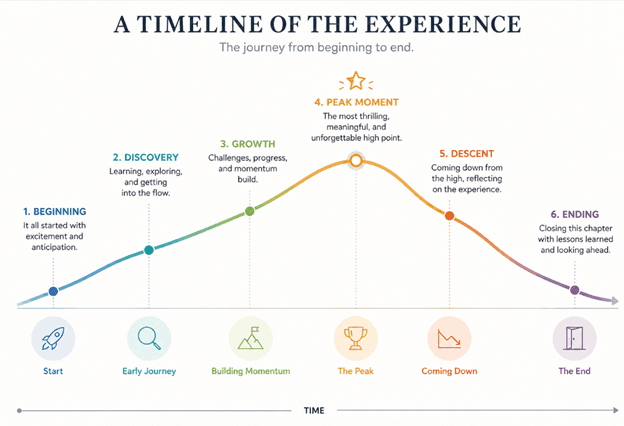
The remembering self gives extra weight to the peak and the ending of an experience.
This distinction changes how readers think about happiness and decision-making. It suggests that the life people remember is not always the same as the life they experience moment by moment.
Practical lessons from the book–Thinking, Fast and Slow
The power of Thinking, Fast and Slow lies in its practical relevance. The book encourages readers to slow down in situations involving statistics, uncertainty, forecasting, or major consequences because those are the situations where intuition is most likely to mislead.
Some of the most useful lessons are straightforward:
- Use data from similar past cases before making forecasts.
- Be cautious when a conclusion feels obvious too quickly.
- Separate first impressions from final judgments in hiring, investing, and project evaluation.
- Pay attention to framing because wording changes choices.
- Expect overconfidence, especially when teams are emotionally invested in success.
| Situation | Better approach inspired by the book |
| Project planning | Use reference-class forecasting and historical data |
| Investing | Check numbers and base rates before acting on intuition |
| Risk assessment | Look beyond vivid examples and media-driven fears |
| Team decisions | Challenge early consensus and invite independent review |
| Personal choices | Reframe the question and compare alternatives carefully |

Better decisions often come from slowing down, checking data, and questioning first impressions.
Why the book remains relevant
The ideas in Thinking, Fast and Slow remain influential because they apply across disciplines, from economics and management to public policy and health decisions. The book gives readers a language for understanding bias, but more importantly, it shows how those biases shape real outcomes in money, work, and everyday life.
For readers interested in leadership, investing, engineering, education, or personal improvement, the book offers a practical mental model: trust intuition in familiar environments with strong feedback but use deliberate analysis in complex and uncertain situations. That single distinction is one of the most valuable takeaways from the entire work.
Conclusion
Thinking, Fast and Slow is not only a book about psychology; it is a guide to better judgment. Kahneman shows that the human mind is brilliant, efficient, and deeply flawed at the same time. By learning how fast thinking works, where it fails, and when slow thinking should take over, readers can make better choices in business, investing, planning, and daily life